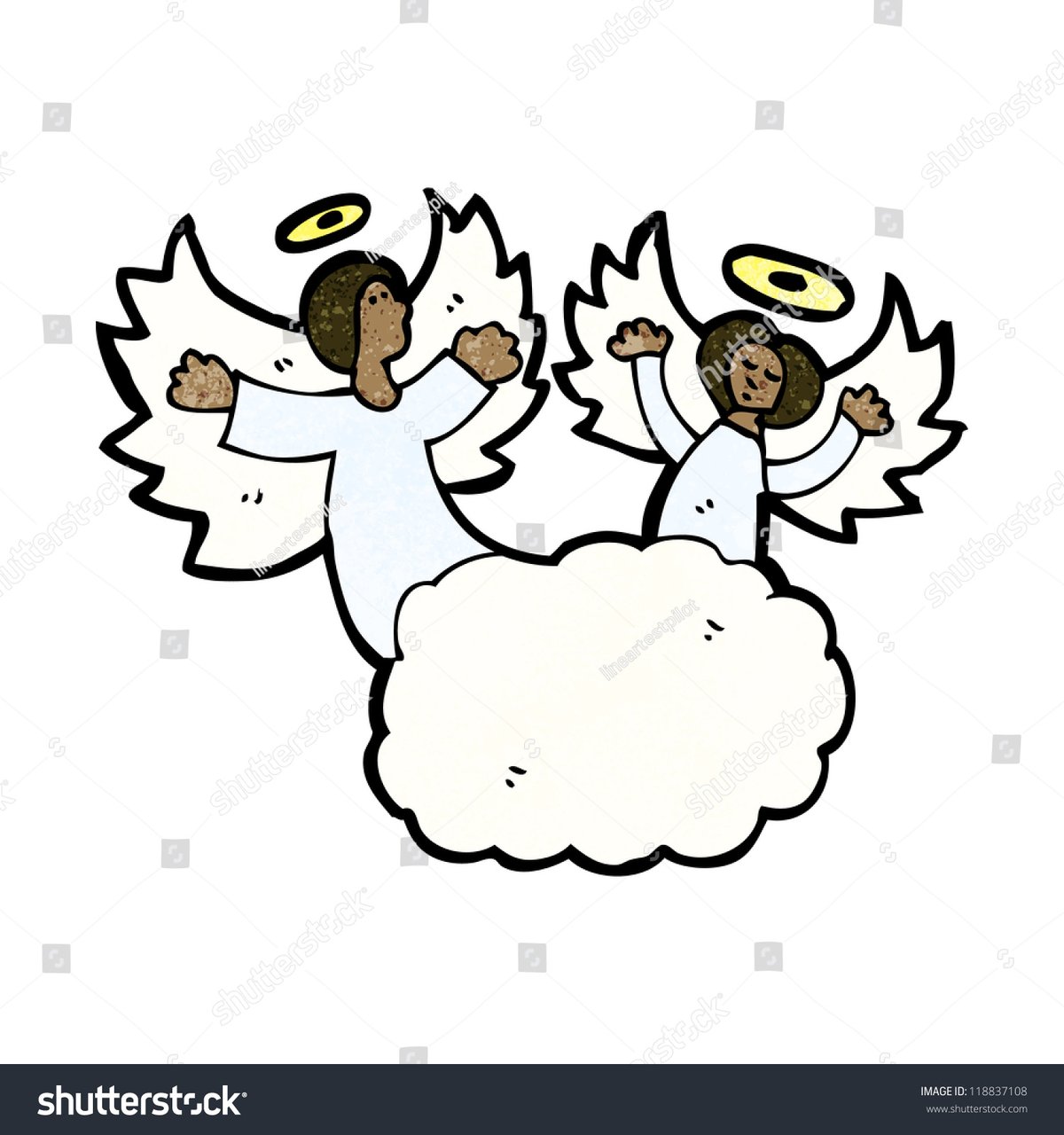
Ever found yourself gazing at a blank page, yearning to bring a whimsical, winged messenger to life? The art of drawing and sketching cartoon angels is a delightful journey, blending ethereal grace with playful expression. It's a skill that's surprisingly accessible, even if your last art class was in elementary school. Forget complex anatomy and intimidating canvases; we're diving into the joyful world of cartooning, where simplicity meets charm.
This guide isn't just about lines on paper; it's about understanding the essence of cartoon angels, from their historical roots as divine messengers to their modern, often gender-fluid, and endlessly charming depictions. We'll break down the process into easy, digestible steps, helping you craft your own celestial characters with confidence and a touch of personal flair.
At a Glance: Your Angel Drawing Toolkit
- Start Simple: Begin with basic shapes (circles, ovals, cylinders) to build your angel's structure.
- Embrace the Archetype: Understand angels as messengers; their depiction can be male, female, or wonderfully ambiguous.
- Wings are Key: Focus on feathered bird-like wings, paying attention to structure and flow.
- Expressive Faces: Cartooning thrives on clear emotions—serene, joyful, or even a little mischievous.
- Dynamic Poses: Make your angels feel alive, whether floating gracefully or striking a playful stance.
- Practice Makes Perfect: Consistent, even short, drawing sessions build skill and confidence.
- Don't Fear Mistakes: They're learning opportunities. Every wonky line gets you closer to a perfect one.
The Enduring Appeal of Cartoon Angels: More Than Just Divinity
Why draw angels? Perhaps it's their universal appeal, their symbolic weight, or simply their inherent beauty. From the moment young Anakin Skywalker mused, "Are you an angel? ...They're the most beautiful creatures in the universe," the idea of these celestial beings has captivated our imaginations. In their earliest forms, the word "angel" actually meant "messenger," often appearing in visions as genderless beings, sometimes with multiple wings and the faces of various animals, or simply as men.
Over time, particularly in Christian iconography, angels evolved. They became more feminized, often depicted with flowing robes and the white, feathered bird wings we commonly recognize today. This shift likely stemmed from descriptions of God himself having wings and "pinions." These stylized figures have become popular motifs, frequently paired with symbols like a heart or a cross, often to commemorate a loved one.
For cartoonists, this rich history provides a fantastic playground. You're not bound by strict realism; instead, you get to interpret, simplify, and infuse these iconic figures with your own unique brand of personality. Whether you envision a cherubic, mischievous sprite or a serene, graceful guardian, cartooning lets you define your angel's look and feel.
Getting Started: Your Essential Drawing Supplies
You don't need a professional art studio to start drawing cartoon angels. A few basic tools are all it takes:
Traditional Tools: Simple & Satisfying
- Pencils: A good range includes a light H pencil for initial sketches, a darker HB or B for linework, and maybe a 2B for shading.
- Eraser: A kneaded eraser is excellent for lifting pencil marks without smudging, while a vinyl eraser is great for cleaner removal.
- Paper: Any standard sketchpad or even printer paper will do for practice. Look for paper that can handle light erasing without tearing.
- Inking Pens (Optional): Fine-tip black pens (like Micron Pigma or Copic Multiliner) can give your finished lines a crisp, professional look.
- Coloring Tools (Optional): Colored pencils, markers, or even watercolors can bring your angels to vibrant life.
Digital Tools: Limitless Possibilities
- Drawing Tablet: Wacom, Huion, XP-Pen, or an iPad with an Apple Pencil are popular choices.
- Drawing Software: Procreate (iPad), Clip Studio Paint, Adobe Photoshop, Krita (free), or Autodesk Sketchbook (free) offer a wide array of brushes and tools perfect for cartooning.
Regardless of your chosen medium, the fundamentals of drawing remain the same. So, grab your tools and let's dive into the core components of your cartoon angel!
Building Your Angel: From Basic Shapes to Dynamic Forms
Every great drawing starts with simple shapes. Think of them as the skeleton upon which you'll build your character. This approach simplifies complex forms and helps you maintain proportion.
Step 1: The Head — Your Angel's Personality Hub
The head is where your angel's character truly shines.
- Start with a Circle: Lightly sketch a circle. This will be the cranium.
- Add the Jawline: Extend lines downwards from the sides of the circle, tapering them to form the jaw and chin. Cartoon styles allow for various jaw shapes—round, pointed, square—so experiment!
- Placement Lines: Draw a horizontal line across the middle of the head for the eye line and a vertical line for symmetry. These guides are crucial for placing features accurately.
- Ears (Optional): Depending on your angel's hair or style, you might add small C-shaped ears along the vertical guideline.
Step 2: The Torso & Limbs — Giving Form to the Figure
Keep it simple and focus on gesture first.
- The Torso: Sketch an oval or a bean shape for the upper body. This helps convey the angel's stance and movement. Think about whether your angel is standing straight, leaning, or flying.
- Connecting the Limbs: Use simple lines for arms and legs, indicating joints with small circles (shoulders, elbows, wrists, hips, knees, ankles).
- Hands & Feet: For cartoons, hands and feet can be simplified. Think mittens for hands and simple rounded shapes for feet initially. As you get more comfortable, you can add fingers and toes.
- Neck: A short, curved line connects the head to the torso.
Pro Tip: Don't press too hard with your pencil during these initial construction phases. These lines are just guides and will be erased later.
The Celestial Touch: Wings, Halos, and Robes
These are the elements that instantly identify your character as an angel. Getting them right, even in a simplified cartoon style, is key.
Mastering the Wings: Feathered Glory
Wings are perhaps the most iconic feature of an angel. They add dynamism and elegance.
- Placement: Angel wings typically sprout from the shoulder blade area on the back. For cartoon angels, you can play with this, making them larger or smaller relative to the body.
- Basic Shape: Start with a large, curved shape for the overall wing. Think of a stretched-out teardrop or a long, curved triangle.
- Feather Layers:
- Primary Feathers: These are the longest feathers at the outer edge of the wing, responsible for flight. Draw them as distinct, elongated shapes, overlapping slightly like shingles on a roof.
- Secondary Feathers: Shorter, broader feathers in the middle of the wing, overlapping the primaries.
- Tertiary/Covert Feathers: Small, fluffy feathers closest to the body, covering the wing joint.
- Flow and Movement: Give your wings a sense of life! Are they spread wide in flight, folded neatly, or slightly ruffled? Curved lines will convey movement and softness. Remember the research notes that angel wings are often depicted as white, feathered bird wings; this gives you a great visual starting point.
The Halo: A Symbol of Purity
A simple, yet powerful, symbol.
- Basic Form: A halo is essentially a ring or disk, typically floating above or behind the angel's head.
- Perspective: If viewed straight on, it's a perfect circle. From an angle, it becomes an ellipse. Make sure it appears to sit above the head, not on it.
- Cartoon Style: For cartoon angels, you can simplify halos greatly—a thick line, a glowing effect, or even a starburst can work.
Draping the Robes: Movement and Form
Angel robes are often depicted as flowing and elegant.
- Simple Silhouette: Start by sketching the general outline of the robe over your angel's body shape.
- Fabric Folds: Don't draw every wrinkle. Focus on key folds that indicate where the fabric is gathered (like around the waist, under the arms, or where it drapes over a leg). Think of "U" or "V" shapes for these folds.
- Movement: If your angel is flying or moving, show how the fabric would trail or billow. Longer, more flowing lines suggest elegance, while shorter, sharper folds can imply dynamic movement.
You can really customize your angel's look, as you can see various styles of cartoon angels across different artistic interpretations.
Bringing Your Angel to Life: Expressions, Poses, and Details
Now that you have the basic structure, it's time to infuse your angel with personality.
Crafting Engaging Facial Expressions
Cartoon faces are all about exaggeration and clarity.
- Eyes: Large, expressive eyes are a hallmark of cartooning. Position them along your eye line. For serenity, keep them slightly closed or with downward-curving brows. For joy, wide eyes and upward-curving brows.
- Eyebrows: They convey more emotion than you might think! Arched brows suggest surprise or innocence; furrowed brows, concern; relaxed brows, calm.
- Mouth: A simple curve can convey a lot. A slight upward curve for a gentle smile, a wider curve for a joyful grin.
- Nose: Keep it simple—a small dot, a curved line, or a tiny triangle usually suffices for cartoon angels.
Dynamic Poses & Gestures
An angel that feels alive is an angel that moves!
- Line of Action: Before drawing, think about the main curve or flow of your angel's body. Is it a graceful S-curve? A powerful C-curve? This "line of action" will guide your entire pose.
- Weight & Balance: Even in flight, characters have a sense of weight. Consider how gravity (or the lack thereof) affects their pose.
- Arm & Hand Gestures: What is your angel doing? Are they offering something, reaching out, or simply floating peacefully? Hands can be particularly expressive, even simplified ones.
Adding Meaningful Details
These are the small touches that elevate your drawing.
- Hair: Flowing, soft hair often suits angels. Think about how it would move with their pose or in the wind.
- Aura/Glow: A subtle glow around the halo or wings can enhance the angelic feel.
- Accessories: As mentioned in our research, angels are often paired with other objects like hearts or crosses. Perhaps your angel holds a tiny harp, a scroll, a flower, or a candle. These details can tell a story.
From Sketch to Finish: Inking, Coloring, and Polish
Once your pencil sketch is complete and you're happy with the pose and details, it's time to refine and bring your angel to its full glory.
Inking: Defining Your Lines
If you're using traditional media, inking your pencil lines adds crispness and prepares your drawing for coloring.
- Choose Your Pen: A fine-tip black pen is ideal. Start with a thinner nib (like 0.1mm or 0.2mm) for details and a slightly thicker one (0.3mm or 0.5mm) for main outlines.
- Go Slow and Steady: Don't rush. Trace over your pencil lines carefully, paying attention to line weight (making some lines slightly thicker than others to add depth).
- Erase Pencil Marks: Once the ink is completely dry (wait several minutes to avoid smudges), gently erase all your underlying pencil lines.
If you're working digitally, you can create a new layer for linework, making it easy to refine your lines and then hide the sketch layer.
Coloring: Breathing Life into Your Angel
Color choice dramatically impacts the mood of your angel.
- Traditional Colors: White and soft pastels (light blues, pinks, yellows) are classic choices for robes and wings, suggesting purity and etherealness. You can also experiment with deeper jewel tones for a more majestic look.
- Skin Tones: Cartoon characters allow for a wide range of skin tones, from pale to deep, rosy cheeks, or even stylized colors like light blue or green for a truly fantastical angel.
- Glow Effects: Use lighter shades or even metallic colors for halos and any areas you want to appear luminous.
- Shadows and Highlights: Even in cartoons, a little shading adds depth. Think about where your light source is coming from and add soft shadows to areas like under the chin, beneath wings, or in fabric folds. Highlights can be added to hair, eyes, and the halo.
Polish & Final Touches
- Background (Optional): A simple background, like a cloudy sky or a few stars, can enhance your angel's environment.
- Textures: Consider adding subtle textures to wings (feather details), hair, or robes.
- Review: Step back and look at your drawing. Does anything feel off? A fresh pair of eyes can often spot areas for improvement.
Common Pitfalls and How to Soar Past Them
Every artist faces challenges. Here’s how to avoid some common stumbling blocks when drawing cartoon angels:
- Stiff Poses: A common issue for beginners.
- Solution: Focus on the "line of action" from the very beginning. Use curved lines for limbs and torsos instead of straight ones. Practice gesture drawing (quick sketches focused on movement).
- Flat Wings: Wings that look pasted on rather than integrated.
- Solution: Understand basic wing anatomy. Draw the wing's "arm" structure first, then layer the feathers. Give them a slight curve and volume; don't just draw them as flat cutouts.
- Inconsistent Proportions: One eye bigger than the other, or an arm too long.
- Solution: Use your initial construction shapes and guidelines religiously. Flip your canvas (digitally) or hold your drawing up to a mirror (traditionally) to spot imbalances.
- Too Much Detail Too Soon: Getting bogged down in tiny details before the overall form is right.
- Solution: Follow the "big shapes first" rule. Get the general silhouette, pose, and main features down before adding individual feathers, hair strands, or elaborate fabric folds.
- Fear of Erasing: Feeling like every line has to be perfect.
- Solution: Embrace the eraser! It's your best friend in the sketching process. Light initial sketches mean you can adjust and refine without leaving messy marks.
Developing Your Unique Angelic Style
The beauty of cartooning is the freedom it offers. While understanding the fundamentals is crucial, eventually, you'll want to infuse your drawings with your own artistic voice.
- Experiment with Proportions: What if your angel has an oversized head for extra cuteness? Or long, slender limbs for elegance?
- Vary Wing Designs: While feathered wings are traditional, consider stylized wings made of leaves, light, or even mechanical parts for a unique twist.
- Different Expressions: Go beyond serene. What if your angel is grumpy, playful, or even a little mischievous?
- Hair & Clothing: Experiment with different hairstyles, from short and spiky to long and wavy. Think about modern clothing styles combined with traditional robes, or even unique accessories.
- Inspiration Everywhere: Look at other cartoon artists, animated movies, comics, and even children's book illustrations. Analyze what you like and try to incorporate elements into your own work, not by copying, but by understanding the underlying techniques.
Remember, every artist's journey is unique. The more you draw, the more you'll discover what you enjoy and what truly resonates with your creative spirit.
Practice, Persistence, and the Joy of Creation
Learning to draw, especially something as endearing as cartoon angels, is a marathon, not a sprint. There will be days when your drawings flow effortlessly, and days when every line feels wrong. That's perfectly normal!
- Draw Regularly: Even 15-20 minutes a day of focused drawing is more effective than one long session once a week.
- Sketch from Life & Reference: While cartooning, look at real birds' wings for feather structure, human figures for poses, and facial expressions for emotion.
- Don't Compare: Your artistic journey is yours alone. Celebrate your progress and focus on enjoying the process.
- Keep a Sketchbook: It's a safe space for experimentation, mistakes, and growth. Don't worry about every page being a masterpiece.
Ultimately, drawing and sketching cartoon angels is a delightful way to explore creativity, develop your artistic skills, and bring a touch of magic to your sketchbook. Whether you're aiming for a simple doodle or a complex character design, the principles here will guide you. So, pick up your pencil, open your mind, and let your imagination take flight. Your celestial masterpiece awaits!